TMR Mixer Guide

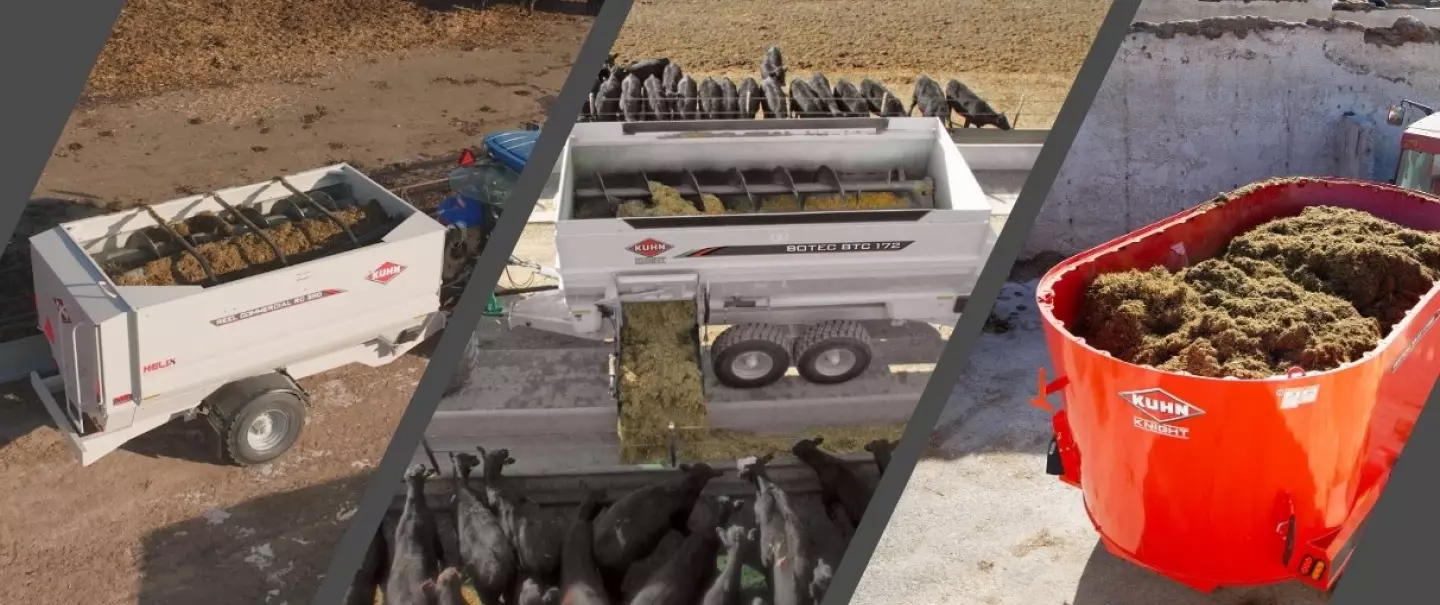
TMR mixers (Total Mixed Ration mixers) are essential equipment for modern feeding systems. They combine forages, grains, supplements and additives into a uniform ration. Different types of TMR mixers suit varying herd sizes, feed ingredients and operational preferences. Below are the main types and their key features. 

Reel, Horizontal & Vertical Mixers Explained

Reel, horizontal, and vertical TMR mixers each bring a distinct approach to processing and blending feed, giving livestock operations the flexibility to choose the style that best matches their ration...

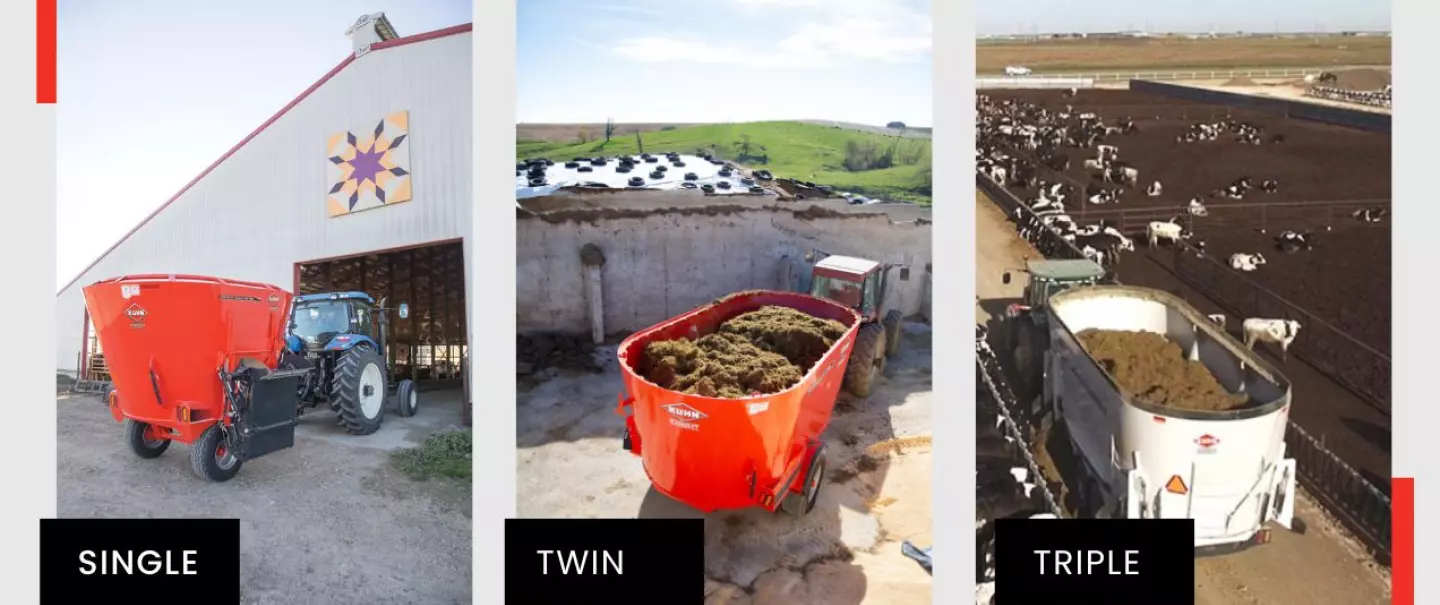
Single vs Twin vs Triple Auger Vertical TMR Mixers

Single, twin, and triple TMR mixers differ mainly in capacity and efficiency. Single augers suit smaller herds, twin augers handle larger loads with faster mixing, and triple augers deliver high-capac...
Mixing Action: Vertical, Horizontal & Reel Mixers 

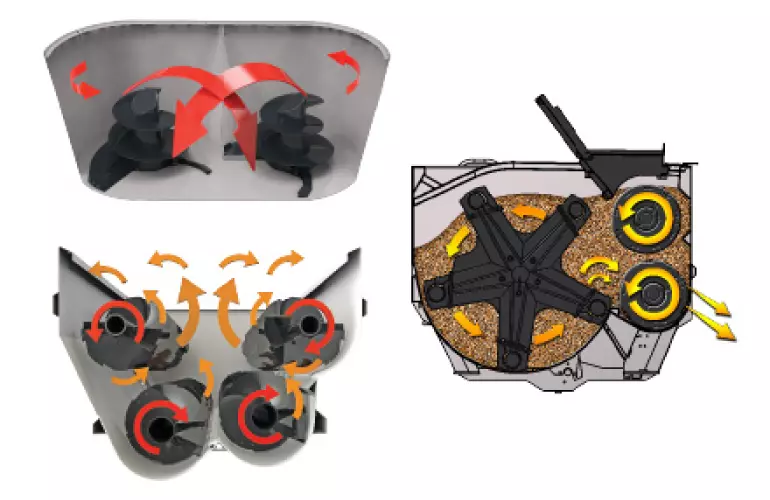
  • Vertical TMR mixers: use one, two or three large vertical augers interacting with each other and the mixer sidewall to move feed around a mixing chamber and blend ingredients together 
  • Horizontal (Auger) TMR mixers: feature multiple horizontal augers; generally, lower augers move feed forward, while upper augers move it rearward to help with load leveling.  
  • Reel (Rotary) TMR mixers: include a large, slow turning reel that tumbles feed to mix it. Often augers work along with the reel to blend feed and level the load. 
KUHN Knight mixer action illustration

Feed Mixer Configuration Options: Trailed, Truck, Stationary & Self-Propelled Mixers 

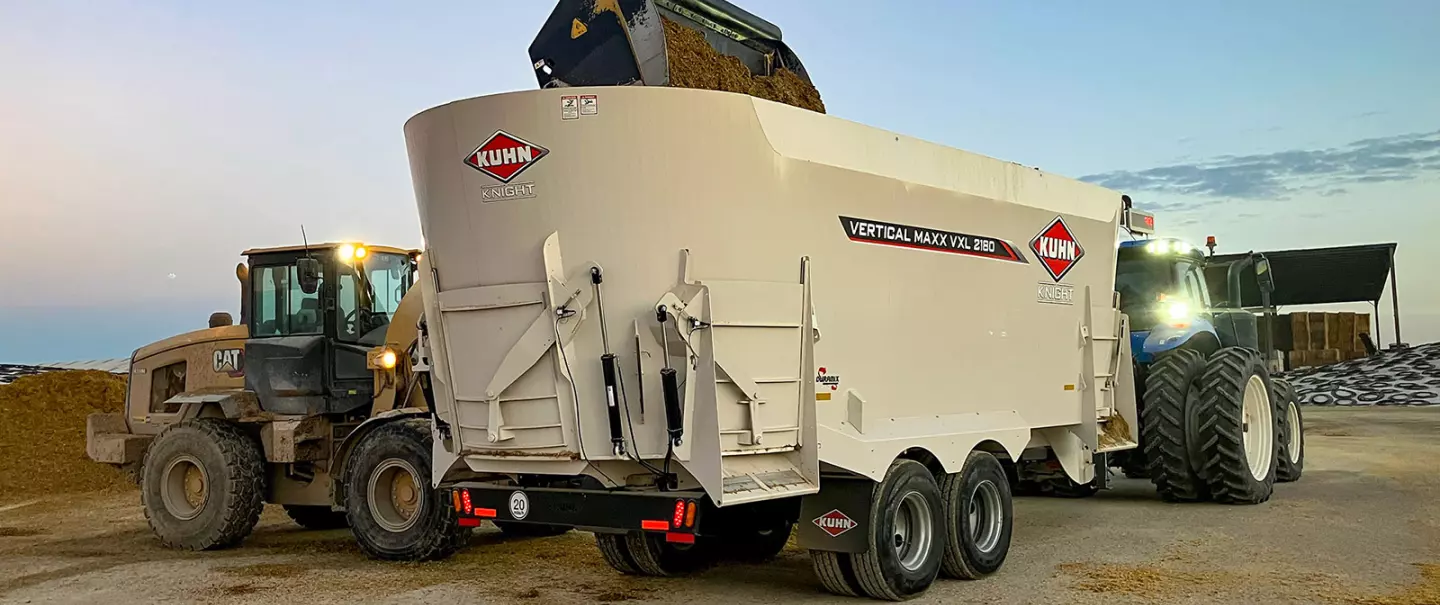
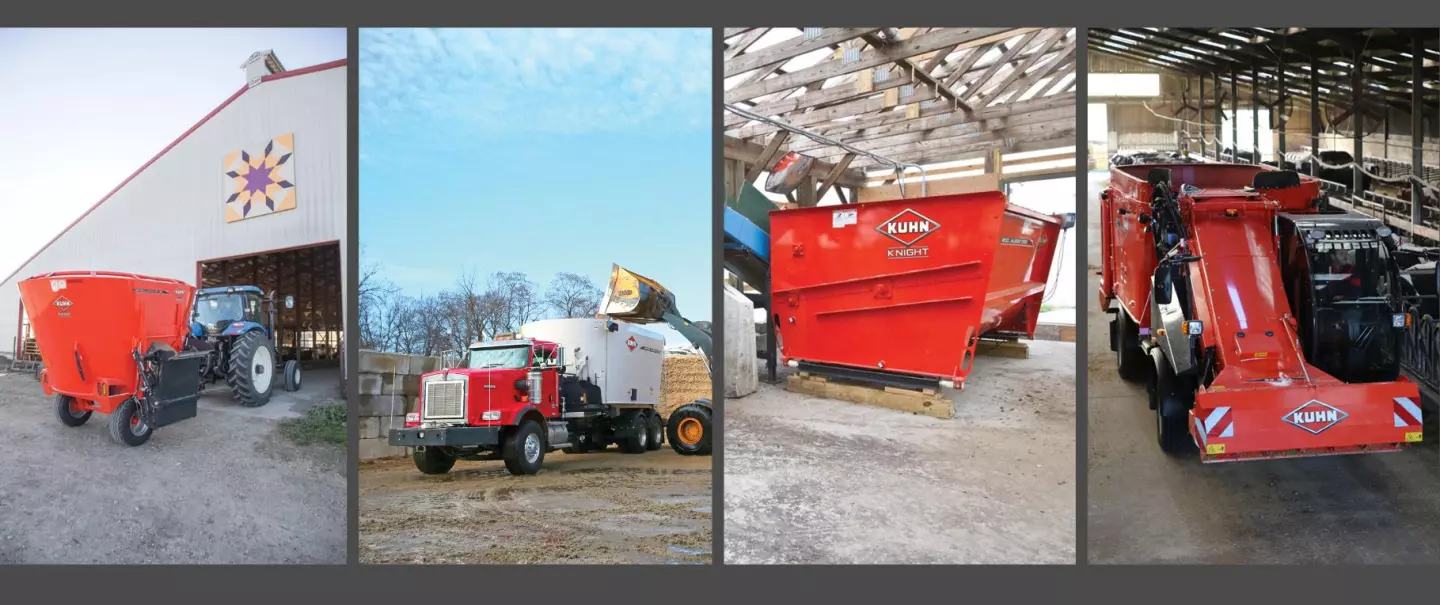
  • Trailed: TMR mixers mounted on trailers and towed by tractors.  
  • Truck Mount: TMR mixers mounted on trucks for quick transport between locations 
  • Stationary: Fixed mixers located at a central feed station.  
  • Self-Propelled: Integrated engine and chassis with built-in TMR mixer, often self loading.  

Key Considerations When Selecting a TMR Mixer  

  • Herd size and ration volume: The number of animals you feed and how many batches you need per day directly influences mixer size, configuration and durability requirements. 
  • Type of ingredients used: Dry bales, baleage, silage and by-products of varying moistures and densities all behave differently in a mixer. Some mixers handle longstem forages easily, while others shine with rations that have higher amounts of grain and by-products. 
  • Current farm infrastructure: Don’t forget about your buildings when analyzing mixer options. Where are you feeding the final TMR? What are your barn door dimensions and alley widths? What about turning radiuses? Will the new mixer be able to comfortably make the tight turn? 
  • Current equipment compatibility: Loader sizing, tractor horsepower and existing facility design all influence which mixer will integrate smoothly into your setup, and which options you might need to select. 
  • Feeding labor goals: How can the labor resources you have available to you for feeding best be used? Do you want to mix fewer loads so you can get on to other tasks in the day? Is feeding labor readily available? What is the skill level of your feeding team? 
  • Long-Term Operation Goals: Consider the long-term impacts of selecting a particular feed mixer. Is an expansion or other change planned in the estimated mixer lifetime? How will your mixer fit into those long-term goals? 
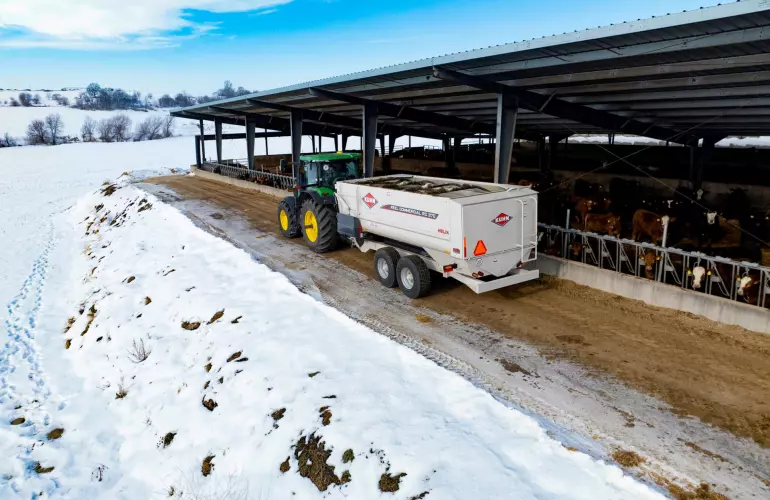
KUHN Knight RC reel mixer