Mergers

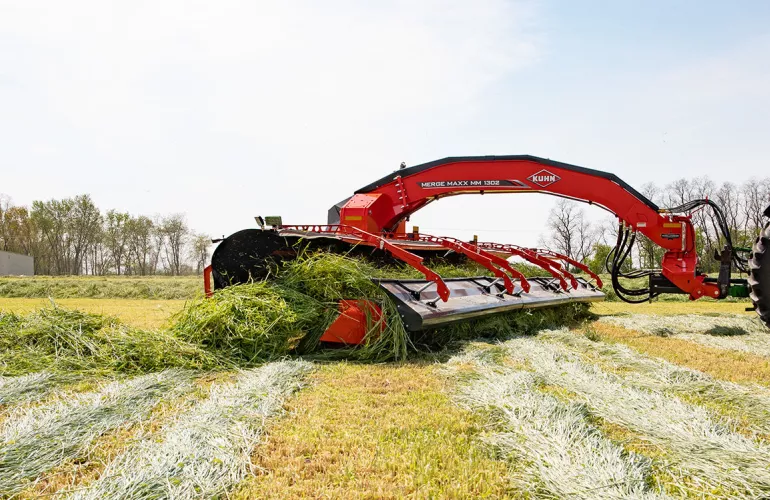
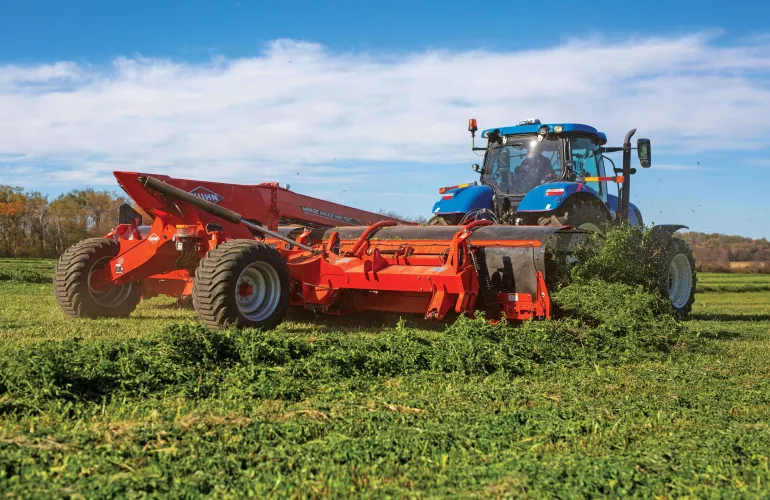
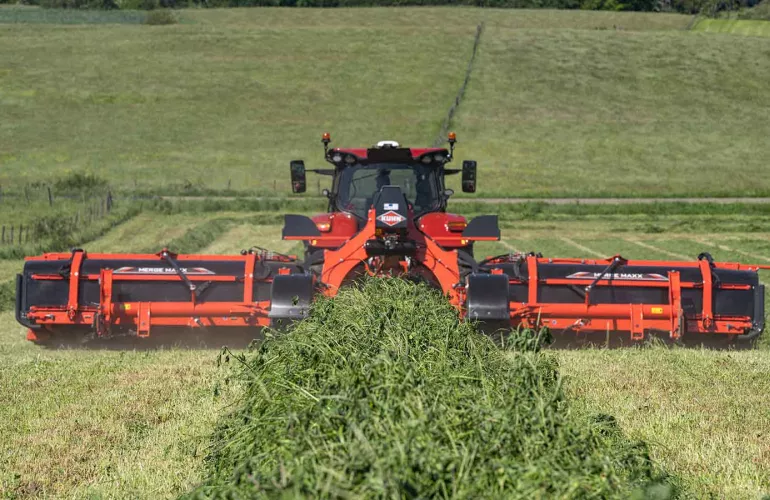
High-performance KUHN Merge Maxx® hay mergers gently pick up the crop and deposit it onto the conveyor belt. This preserves the delicate leaves of forages such as alfalfa, for maximum feed value. Merging multiple windrows also maximizes your harvesting efficiency, saving valuable time and fuel to grow your bottom line. With single, twin and triple mergers available, KUHN has a merger to fit any acreage operation.

Trailed Mergers

Maximize your hay harvesting efficiency with KUHN's trailed Merge Maxx® hay mergers. Designed for superior performance and durability, our hay mergers ensure optimal windrow formation, reducing drying time and preserving forage quality. With user-friendly controls and robust construction, KUHN’s trailed Merge Maxx mergers are the perfect solution for farmers seeking to enhance productivity and achieve consistent, high-quality results. Discover the difference with KUHN – where innovation meets reliability.

Read more

MM890S_Static_03.jpg

Mounted Mergers

KUHN’s mounted mergers provide an innovative, efficient solution for windrow management. Specifically designed for compatibility with select self-propelled windrowers, these machines improve forage quality and optimize crop collection. With durable construction and easy attachment, our mounted mergers enhance productivity, reduce contamination and increase overall efficiency during harvest. Explore how KUHN’s Merge Maxx® merging technology can transform your forage operations.

Read more

KUHN Hay Mergers

How does a hay merger work?

A hay merger is used to gather a wide width of cut crop and deposits it onto a moving conveyor belt, combining multiple smaller windrows into a single windrow, or swath. Merging crop increases forage harvesting productivity by creating a larger windrow to allow the baler or chopper to run at maximum efficiency. 

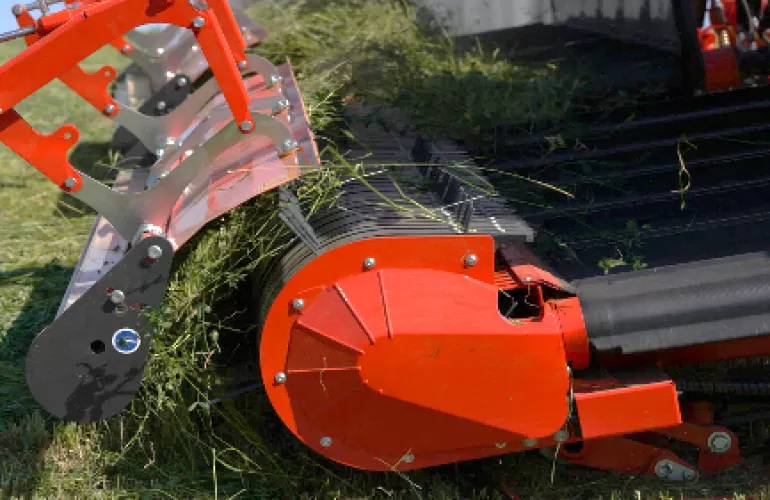
  1. Pickup teeth rotate and gentle pickup cut forage and deposit it onto the conveyor.
  2. The conveyor belt transports the crop into a consolidated windrow The conveyor deposits the crop to the left, right, split or center delivery based on model and operator preference. 

What forages can be merged? 

Mergers create a consistent swath in various forages, from light to heavy crop, and are well suited for a wide variety of field conditions. Mergers are commonly used in silage production but can be used in dry hay as well. Common crops mergers excel in include: 

  • Traditional forages such as alfalfa and grass hay
  • Winter forages such as rye, wheat and triticale 
  • Sorghum, sudan grass and sorghum-sudan hybrids 
MM1302_Action05_MAW1.jpg

What features should you look for in a hay merger?

Windrow Placement: Multiple Crop Delivery Options 

Choose a machine with the capability to deliver multiple windrow options. The ability to merge crop to the left side, right side, or split provides operators flexibility and maneuverability when opening fields, avoiding obstacles or cleaning up point rows. 

High-Capacity Pickup & Heavy-Duty Belt Conveyors

Look for pickups that gently handle the crop to retain leaves and forage quality. The design should also prevent crop from catching or building up on the pickup. 

Heavy duty conveyors allow effective crop transfer into the windrow, no matter the discharge direction. Uniform, fluffy windrows allow the chopper to run at consistently higher speeds to improve efficiency while reducing trips across the field. 

Effective Suspension System 

The suspension system provides smooth ground following and allows the pickup heads to adapt to uneven terrain clean forage pickup. The suspension also ensures protection of the stubble and forage stand by preventing the merger from digging into the dirt. 

Narrow and Simple Transport

Wide working widths improve the efficiency of field work, but the ability to fold compactly is essential for safe and easy road transport. 

What are the different types of mergers?

Mergers can be classified in a few different ways: the number of heads (single, twin and triple), forage delivery directions (center or side delivery) and attachment style (mounted or trailed). 

Single, twin and triple mergers 

  • Single: Feature a single pickup head and are ideal for smaller operations looking to make quality forage. It's low-maintenance design and simple operation is ideal for working with mowers or mower conditioners from 9' to 18' cutting width. KUHN single mergers offer up to 18' (5.5 m) working widths with the use of the optional conveyor extension. 
  • Twin: Feature two independent pickup heads and are designed with mid- to large dairy and commercial forage operations in mind.  KUHN twin mergers offer working widths up to 36' (11 m). 
  • Triple: Include three independent mergers heads for forage growers who operate extensive acreage where higher capacity and improved crop flow are critical. KUHN triple mergers offer working widths up to 42' (13 m). 
MM-701_Action_11.jpg

Side vs center delivery mergers

Side delivery models, such as the MM 701/890 and MM 1102/1302 create uniform rows to the right or left of the machine. This allows for easier merging of multiple windrows, providing a real advantage in light or thin crops. 

Center delivery models, including the MM 952 & 1092, offer the option to delivery forage to the center of the machine in addition to the side for operations needing the flexibility of both options. Hydraulic shifting of the conveyor can accommodate smaller baler pickups to large forage harvesters. 

Andaineur à tapis MERGE MAXX 952

Trailed vs mounted mergers

Trailed mergers are the most common machine choice and are attached to the rear of the tractor using the drawbar hitch. Trailed mergers often offer wider working widths and follow rolling terrain independently. 

Mounted mergers (MM 701 S & 890 S/SC models) attach to specific self-propelled windrower models and are well suited for specific operations with flat terrain. The offer unique front visibility for improved operator comfort but are only available in twin configuration. 

How do you choose a hay merger for your mowing setup?

In addition to the factors listed above, finding a mower with a working width that matches your mower or mower conditioner is essential for efficiency. The KUHN ForageXpert app can help you determine the merger that fits best in your operation based on the working width of your mower. 

ForageXpert is available in both mobile and desktop versions. Click here to learn more. 

Learn More About Our ForageXpert App

Belt mergers vs rotary rakes

Both machines deposit cut crop into a windrow, but there several key differences that set their performance apart: 

  1. Contamination: Belt mergers lift the crop straight from the ground and onto the belt to offer reduced ash contamination and lessen leaf loss in delicate crops like alfalfa. Rotary rakes drag cross across the ground, which can incorporate stones or ash into the windrow if not operated properly. 
  2. Operating Speed: Belt mergers can generally run at faster operating speeds compared to a rotary rake, making the most of tight harvest windows
  3. Cost & Maintenance: Belt mergers come with a higher initial investment and operate using a more complex system in contrast fewer moving parts on a rotary rake. 
SmallDiameterPickups.png

How much horsepower does it take to run a merger? 

KUHN mergers feature a minimum tractor PTO hp requirement of 50 hp (37 kW) on single mergers up to 160 hp (119 kW) minimum on our triple mergers. Horsepower requirement varies by models and field conditions. For more information, please consult the specification on our available models: MM 301, MM 701 & 890, MM 952 & 1092, and MM 1102 & 1302.

Are KUHN mergers ISOBUS compatible? 

Yes, KUHN twin and triple merger models are ISOBUS compatible for enhanced control of the machine, including machine adjustment and performance feedback. 

Mergers for sale near me

Single, twin and triple mergers can be found at authorized KUHN dealerships across North America. Locate your nearest dealer here. 

dealer finder map KNA